Buying & Renting
Buying a flat? Check the building as carefully as the apartment
A beautiful apartment is only part of the decision. Here’s how to investigate the building, its management and the questions behind the asking price.
By ResiPulse Editorial · 26/11/2026
Updated 28/11/2026
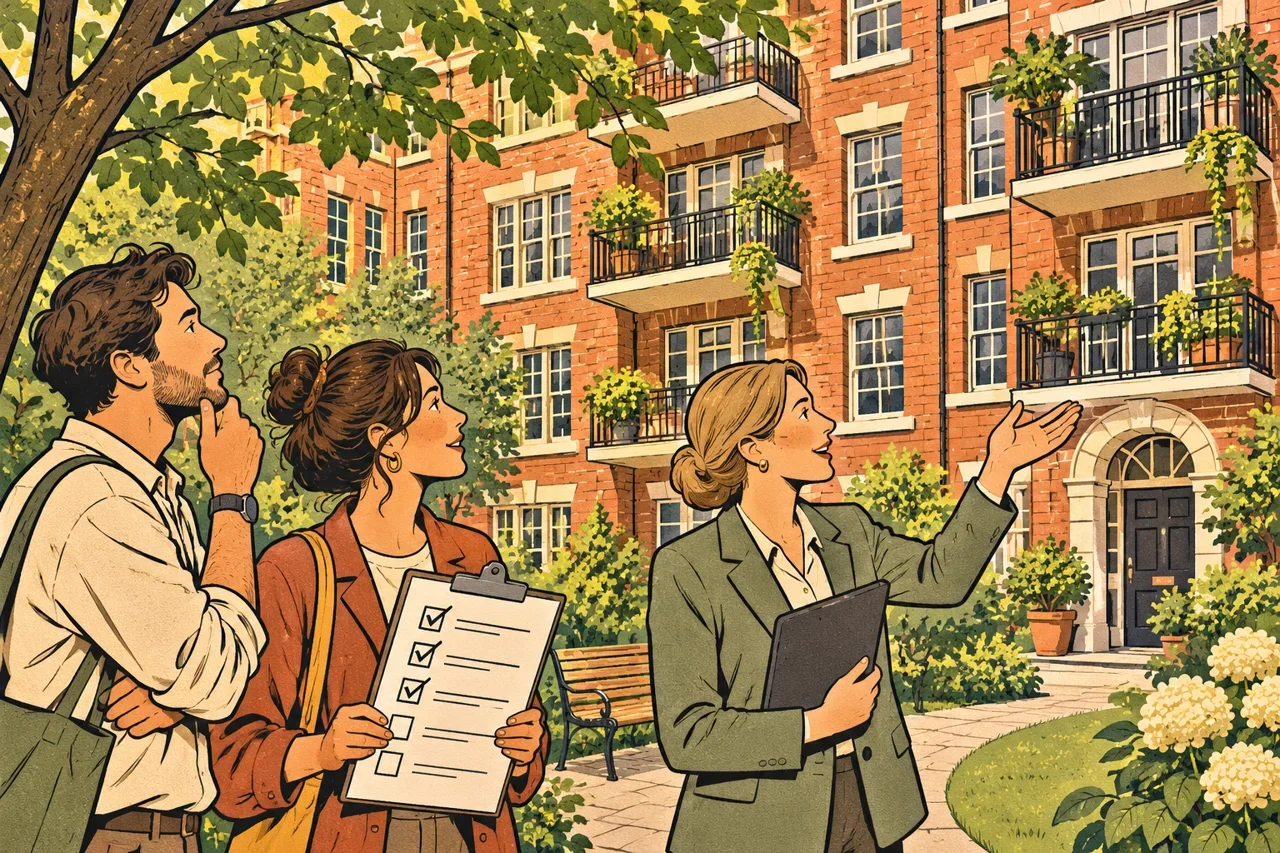
Look beyond the front door
A bright living room and a good floor plan can make a flat feel right immediately. But living there also means using the entrance, relying on the lifts and sharing responsibility for parts of the building.
Treat your viewing as two separate inspections: the apartment itself and the building around it.
Walk the route you would use every day
Start at the street entrance and follow the route to the flat.
Does the entry system work? Are corridors maintained? Where do deliveries go? Is the bin store accessible? If you cycle, ask to see the storage rather than relying on a description.
If there is a concierge, establish the actual hours and services. If a gym or residents’ lounge influenced your decision, ask to see it and check access arrangements.
Think about the building when you are carrying shopping, moving furniture or coming home late, as well as how it looks during a viewing.
Investigate the paperwork early
For a leasehold flat in England or Wales, ask your solicitor to check:
The remaining lease term.Ground rent provisions.Service charges.Reserve funds.Planned major works.Relevant building-safety issues.What legally comes with the flat, including any parking space or storage area.
The Leasehold Advisory Service’s guide to buying a leasehold flat explains important matters to investigate before committing.
An estate agent’s answer is a useful starting point. Have important details confirmed through your conveyancer.
Ask how the building is managed
Find out who manages the building and how residents report problems.
Useful questions include:
Who handles everyday repairs?Are any significant works being discussed?What documents explain recent building expenditure?Is there a residents’ association or another way residents communicate?
If you speak with a resident, ask about specific experiences: how a repair was handled or how clearly management communicated.
One person’s experience is useful context, not a verdict on the whole development. Look for supporting information before drawing broader conclusions.
Visit at a different time
A quiet weekday viewing may give you little sense of evening traffic, deliveries or activity around communal areas.
Where practical, return at another time. Spend a few minutes outside and try the journey to the station, shops or bus stop yourself.
Notice the position of the flat within the building. A bedroom beside a communal entrance may feel different from one overlooking a courtyard, even when the floor plans are similar.
Keep an unanswered-questions list
Separate your notes into three groups:
Confirmed information: details supported by documents or professional checks.Observations: things you noticed during your visits.Open questions: points still awaiting an answer or evidence.
For each open question, note who should answer it: the seller, estate agent, managing agent, solicitor or surveyor.
This makes it easier to compare flats without confusing attractive presentation with a well-understood purchase. Your building research should complement your solicitor’s checks and an appropriate survey.